11 Low-Intensity Supports Across the Tiers
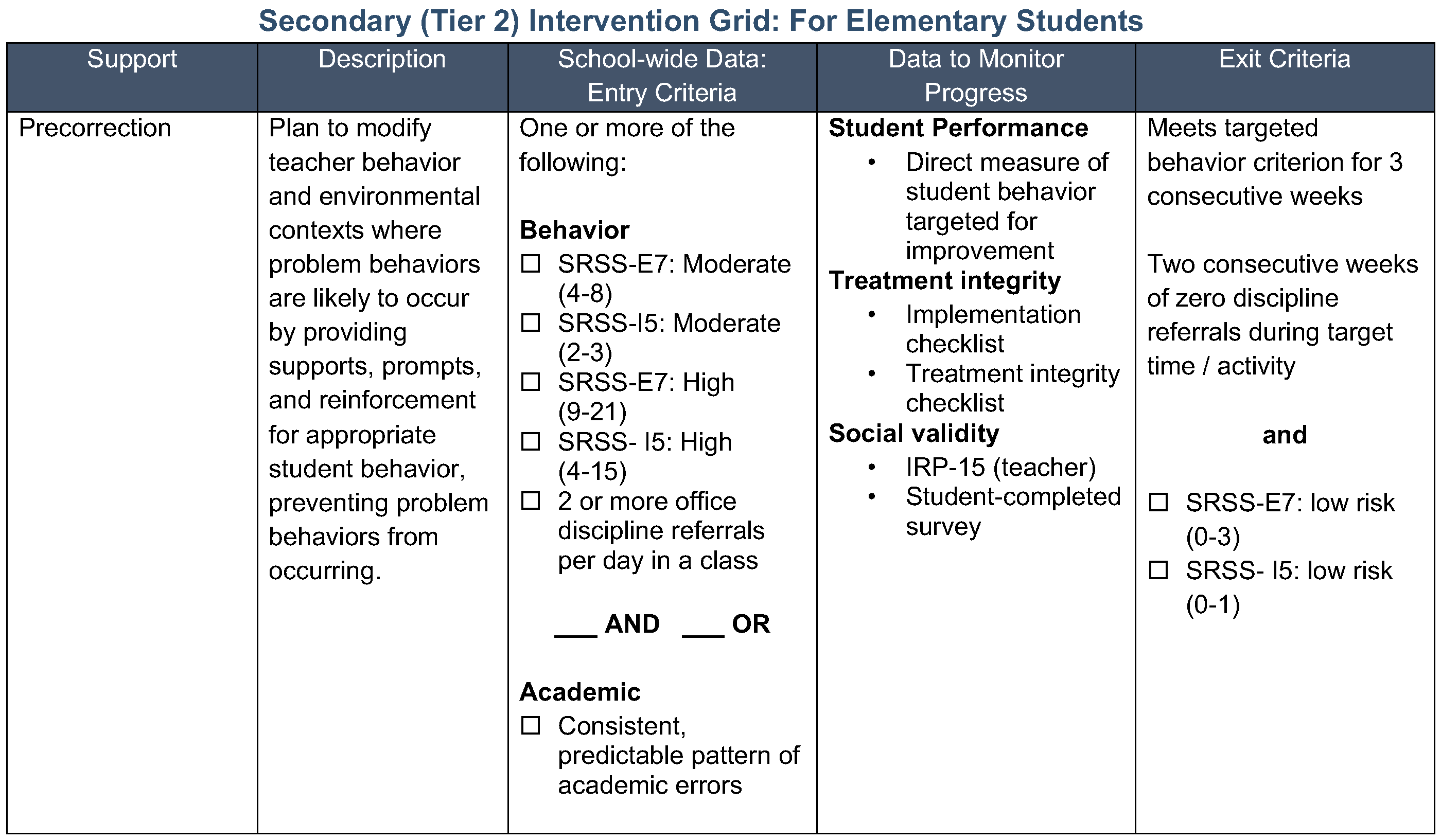
Infographic: Precorrection intervention grid
As we discussed at the beginning of the module, low-intensity supports such as precorrection are useful because they can be implemented in a variety of ways to support students. Precorrection can be used:
- as a component of Tier 1 instruction to increase engagement and prevent disruptive behavior
- as a stand-alone Tier 2 intervention
- as part of other low-intensity supports (e.g., active supervision)
- as a component of a Tier 2 intervention (e.g., embedding precorrection into a targeted social skills instruction group)
- as a component of a Tier 3 intervention (e.g., embedded into a functional assessment-based intervention (FABI), such as an antecedent adjustment planned when designing Antecedent-Reinforcement-Extinction intervention components).
The beauty of this approach is that if you determine a student might benefit from a Tier 2 or Tier 3 intervention that involves use of low-intensity supports, you will feel knowledgeable and confident in doing so because you will have already been using it at Tier 1.
However, before deciding to connect students to Tier 2 supports – even simple ones, like more intentional use of low-intensity strategies – it is first critical to reflect on the extent to which all Tier 1 practices are in place.