5 Where is Precorrection Situated in a Ci3T Model?
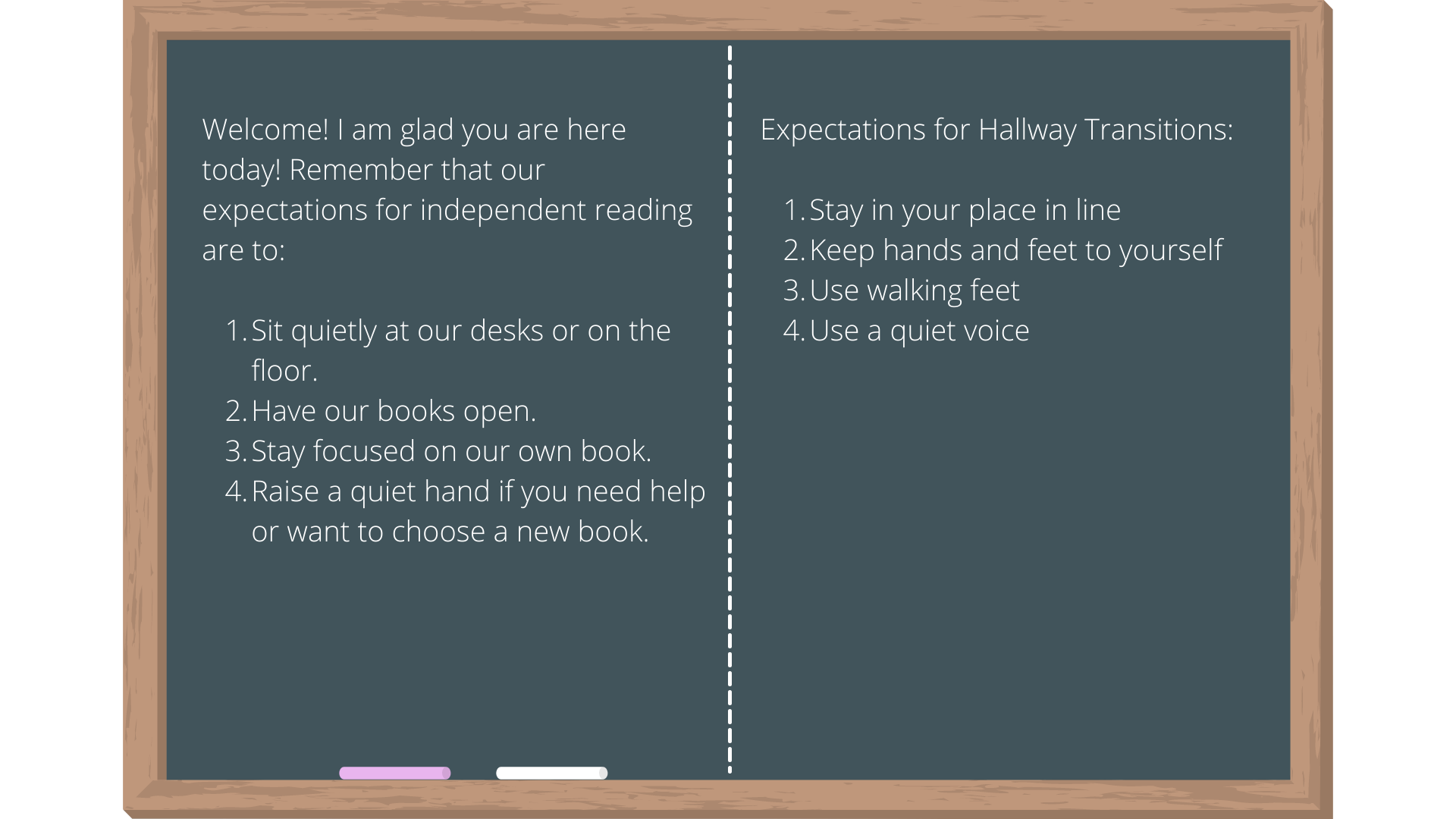
As we noted above, precorrection is an easy-to-use, antecedent-based strategy (Ennis, Royer et al., 2018). One place precorrection is situated in Ci3T is as a Tier 1 strategy to prevent challenging behavior. As illustrated in the box below, by using an integrated approach to instruction teachers can use precorrection during instruction (e.g., before sending students into small group activities or independent tasks), to facilitate transitions, and in a range of non-instructional settings (e.g., before heading to a homecoming football game).
Precorrection can also be used as a stand-alone Tier 2 intervention. For example, it is possible for a teacher to use precorrection with all students in their class (e.g., “Please remember to start by using the POW [Plan, Organize, and Write] mnemonic as we head into our writing time;” Harris et al., 2008), but collect information on how precorrection worked when used more intentionally as a Tier 2 support for two students in their class with externalizing behaviors who often have trouble getting started right away during independent writing activities.
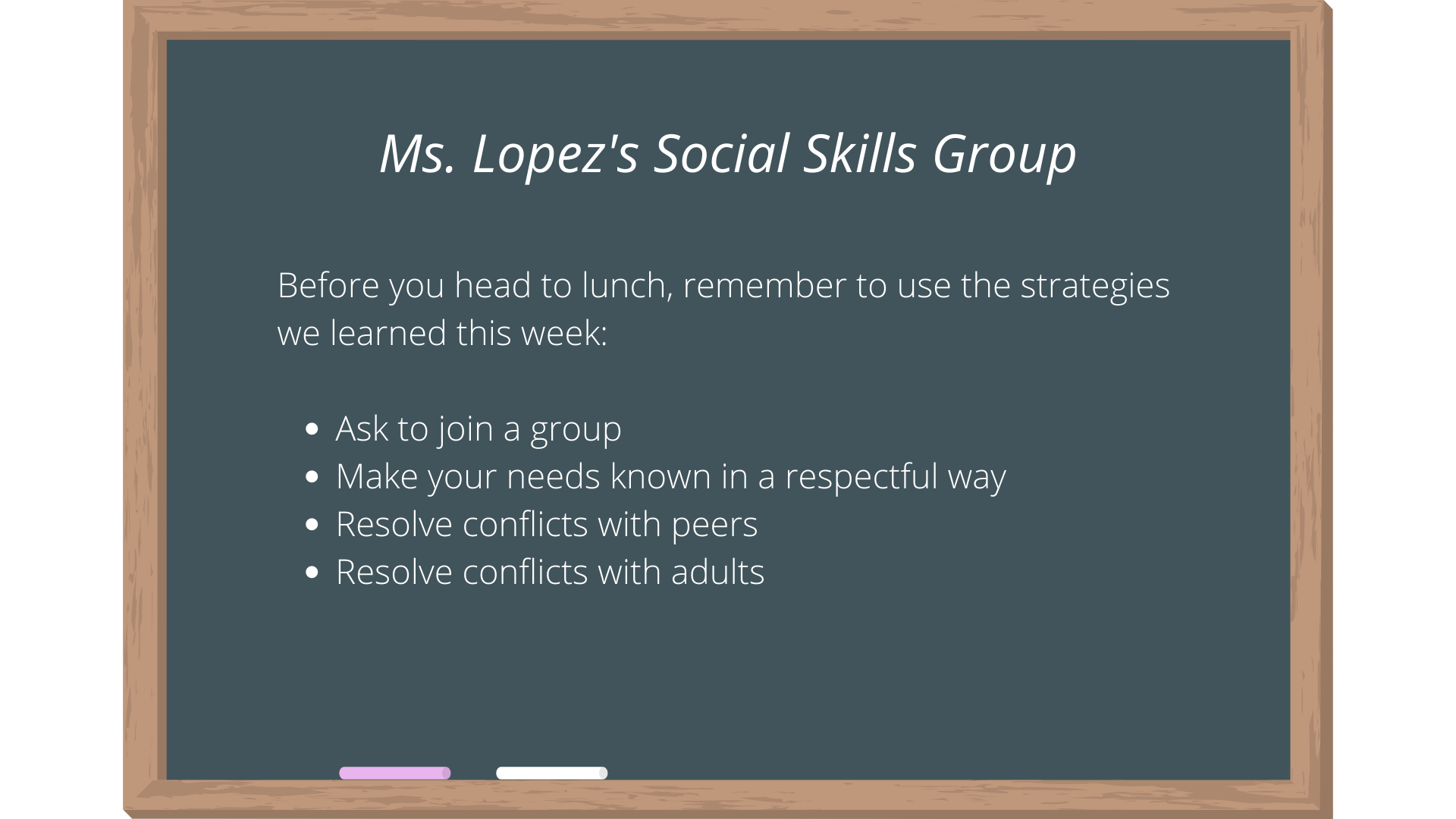
Furthermore, precorrection can be integrated into Tier 2 interventions. For example, the school counselor leading a social skills group could prompt group members to use the strategies they have learned when they head out to lunch (e.g., asking to join a group eating lunch together) or during an afterschool kick-ball game (e.g., saying “that looks fun, can I join?”; Common, Buckman et al., 2019).
Finally, precorrection can be used as part of Tier 3 supports when built in as an antecedent component of a functional assessment-based intervention (FABI; Umbreit et al., 2007). For example, the teacher might use precorrection to remind the student to keep in mind the Tier 1 social skills lesson on turn-taking before they get started in their cooperative learning group. Or a teacher might use precorrection as part of a de-escalation plan to remind students of expected behavior before they are confronted with a known trigger (e.g., schedule change; see the Module Managing Acting Out Behavior at Tier 3: Building an Individualized De-Escalation Plan for more information).
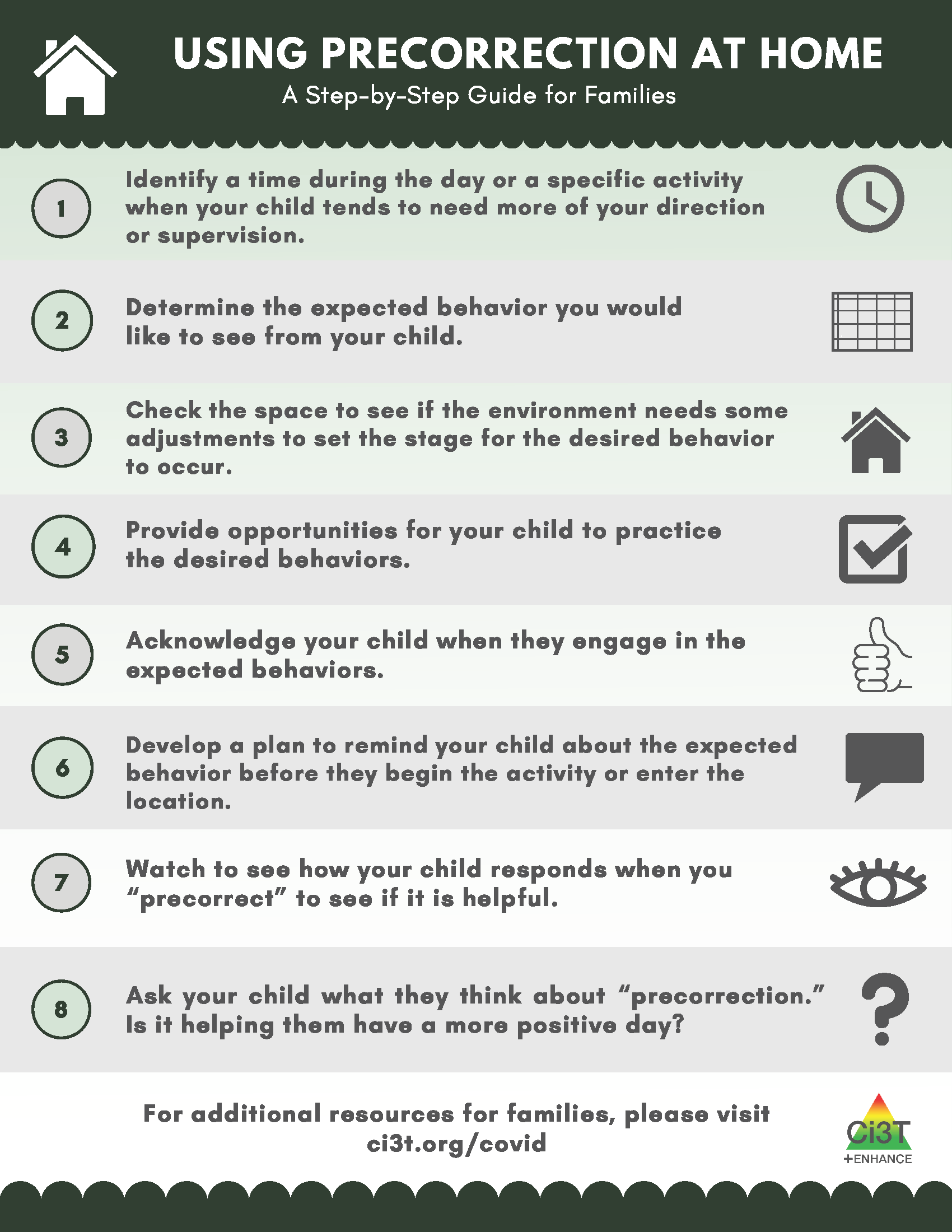
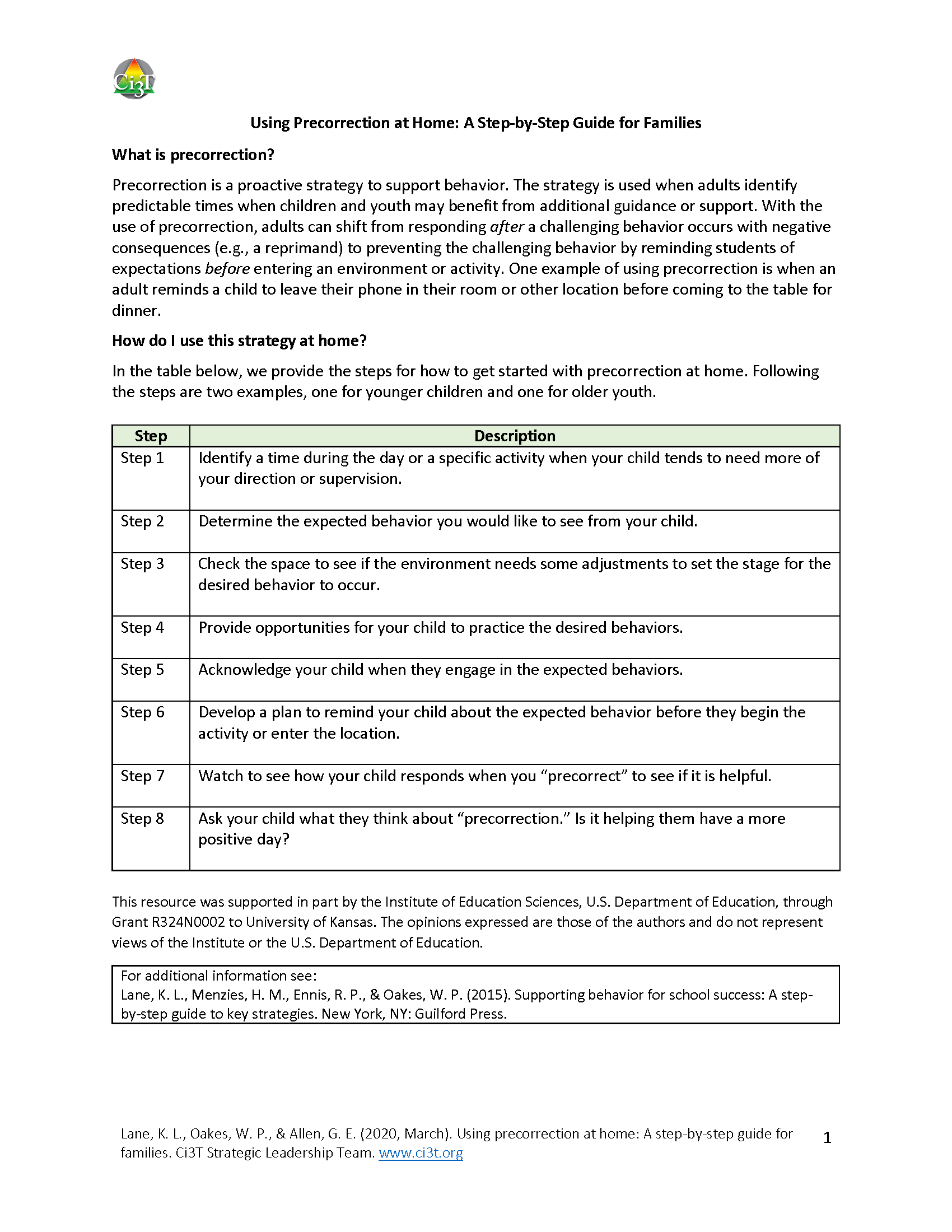
In addition to being an effective, efficient strategy for use in the school setting, families can also use this practical strategy at home to support desired behaviors during daily routines (e.g., homework time, getting ready in the morning, getting to the bus on time). See the implementation checklist, infographic, and video illustrating how precorrection can be incorporated at home!