







Ci3T Framework
The Comprehensive, Integrated, Three-Tiered (Ci3T) Model of Prevention is a data-informed, research-based framework designed to help school leaders integrate academic instruction, positive behavior supports, and social and emotional well-being into one coordinated system.
Rather than treating these areas as siloed initiatives with separate teams, Ci3T Leadership Teams bring them together so schools can:
- Create positive, productive, safe learning environments
- Support students’ multiple needs proactively
- Facilitate communication and collaboration at school and with families
Academic
Ci3T schools implement research-based academic strategies, practices, and programs that meet student needs and are feasible for educators to implement effectively.
Behavioral
Ci3T schools implement positive behavioral interventions and supports to promote prosocial behavior and create predictable learning environments.
Social and Emotional Well-Being
Ci3T schools implement validated social and emotional well-being programs to teach skills such as self-awareness, relationship skills, and responsible decision-making.
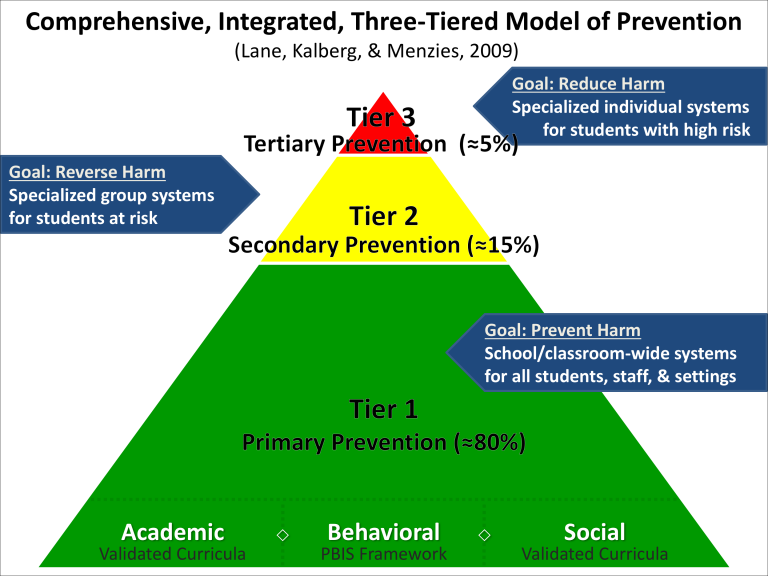
Comprehensive, Integrated, Three-Tiered (Ci3T) Model of Prevention
Ci3T models of prevention assist schools in creating a comprehensive, systems-oriented approach to support students’ academic, behavioral, and social competencies, promote collaboration among school and community stakeholders, and strengthen educators’ efficacy through data-informed professional learning.
Why It Matters
- When systems are prevention-oriented, educators spend less time reacting and more time teaching, and students benefit from having access to extra supports when they need them.
- When systems are integrated, educators, school leaders, and families can collaborate and meet students’ multiple needs more efficiently and effectively.
- When systems are data-informed, educators and school leaders have the information they need to respond at the earliest sign of concern.
Why Was Ci3T Created?
Schools are complex environments where educators are asked to meet students’ unique academic, behavioral, and social and emotional well-being learning needs, often while managing multiple initiatives, limited time, and increasing demands.
Ci3T was developed to help schools move toward a transparent, coordinated, research-informed system to support educators and maximize student success.
Ci3T was the first tiered model to include a social domain, broadening traditional multi-tiered systems of supports focused on academics and behavior.
Ci3T supports schools in creating a systems-oriented approach to:
- Integrate supports for students’ academic, behavioral, and social and emotional well-being learning needs across the tiers using data-informed decision-making efforts.
- Promote collaboration and teaming among administrators, educators, families, community partners, and students.
- Support educator well-being through clear roles and responsibilities, supportive environments, and data-informed professional learning.
Core Principles of Ci3T
Ci3T is a systems-level initiative, a process that evolves with your school and district, guided by a set of core principles that shape both design and practice.
- Prevention-focused: Prioritize integrated Tier 1 practices to support all students.
- Inclusive: Design environments that are welcoming and accessible to all learners.
- Collaborative: Promote collaboration and integrated teaming within the school and with community stakeholders.
- Data-informed instruction: Use data at the school, grade, classroom, and student levels to guide all decision-making.
- Data-informed professional learning: Use data to identify professional learning needs for adults who support implementation.
- Design → Implement → Sustain: Engage in continuous, data-driven improvement.
The Three Tiers of Ci3T
Ci3T organizes supports across three main tiers, ensuring all students receive what they need to thrive.
Tier 1: Universal Supports
Research-based practices are used across academic, behavioral, and social and emotional well-being domains to support all students.
Low-Intensity Strategies
Teacher-delivered, low-intensity strategies are used across the tiers to support engagement and prevent counterproductive behavior.
Tier 2: Targeted Supports
Students receive research-based, integrated interventions when data show they need support beyond Tier 1.
Tier 3: Intensive Supports
Students receive increasingly intensive interventions when data show they need support beyond Tier 1 and Tier 2.
Using Data to Guide Decisions
Data use is central to Ci3T—not for compliance, but for clarity and decision-making. Data-informed professional learning is a unique feature of Ci3T.
Educators and school leaders use data to ask and answer meaningful questions, such as:
- How well is Tier 1 meeting the needs of our school as a whole?
- What low-intensity teacher-delivered strategies could strengthen the Tier 1 experience?
- Which students may benefit from Tier 2 or Tier 3 interventions?
- How are our colleagues doing with implementation?
- What supports can we provide to educators and families to meet students’ needs and support educators’ well-being?
Ci3T emphasizes practical, actionable data sources, such as systematic universal screening, treatment integrity, and social validity.
Supporting Educators Through Data-Informed Professional Learning
Sustainable Ci3T implementation depends on supporting the people doing the work.
Ci3T uniquely emphasizes data-informed professional learning to help school leaders and educators build skills needed to implement practices with confidence and fidelity.
Support includes:
- Asynchronous professional learning modules
- Coaching and guided implementation supports
- Opportunities to learn online alongside other schools and districts
Ci3T Modules on the Basics
Ci3T Modules offer in-depth professional learning. Explore these featured modules, or browse the full collection.

Ci3T in Action
Ci3T looks different in every school, but the framework is always the same: a comprehensive, integrated system that supports student success by empowering educators, families, administrators, and students themselves.
See illustrations of what Ci3T could look like in action at your school.
Ready to Dive Deeper?
Now that you know what Ci3T is, you can explore next steps that support where your school or district is right now.
New to Ci3T?
Learn about the Ci3T Design Professional Learning Series, which guides schools through designing a model that fits their context.

Already Implementing?
Learn about the Ci3T Implementation Professional Learning Series, which supports schools as they implement and sustain Ci3T.

Interested in Research?
Review the growing body of research that informs the Ci3T Model of Prevention.


